
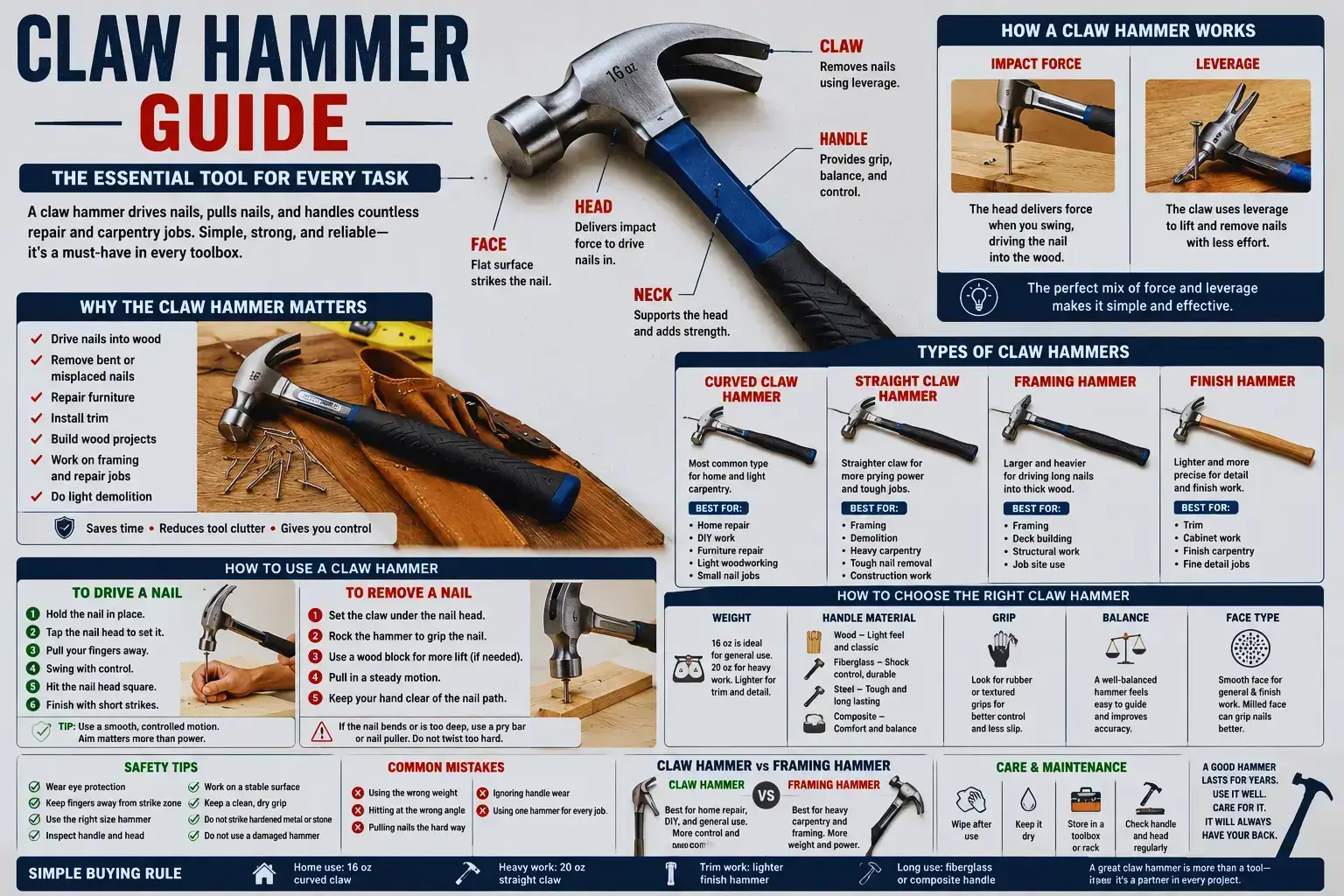
Claw Hammer Guide
The claw hammer is one of the most versatile hand tools that can be found in any home, shop or work site. Hammers nails into wood using a rip claw hammer for better leverage. It also removes nails. That’s a relatively simple task and is therefore a tool that many people will seek out first.
What home users, carpenters, contractors and tool buyers all want is the same. They want a hammer that is safe, fits in the hand and works with less effort. A good claw hammer is useful in making repairs, woodworking, framing, trim work and light demolition.
This guide is about what a claw hammer is, how it works, what type of claw hammer is best for each job and how to pick up the right claw hammer for any job with confidence.
What A Claw Hammer Is
A claw hammer is a type of tool used to strike that has two main ends. It has a flat end to drive nails with, making it a perfect nail starter. The other end is equipped with a claw to remove nails from wood.
It is named for the claw-like shape at the back of its head. A curved claw hammer is the type most people would use at home. A straight claw hammer is a tool used by many carpenters and framers for heavier work.
A claw hammer is a hand hammer, but it’s more than that. Also it employs leverage. This makes it easier to remove nails than with force.
Why The Claw Hammer Matters
The benefit of a claw hammer is that it performs two tasks in one tool.
It aids when you need to:
- Drive nails into wood
- Remove bent or misplaced nails
- Repair furniture
- Install trim
- Construct basic wood construction projects using a rip claw hammer for added efficiency.
- Adhere to the safety regulations for working on framing and repair projects
- Do light demolition
It saves time. Reduces tool clutter. It also provides you with control. Many jobs can’t be done with a power tool, and the feel of a quality hammer is still the best.
Main Parts Of A Claw Hammer
| Part | Job |
|---|---|
| Head | Hits the nail |
| Face | Striking surface |
| Claw | Pulls nails |
| Neck | Supports the head |
| Handle | Provides grip and control |
Head
The head is the place where the striking force is found. Forged steel is a common material for tool manufacturers as it is strong and durable. A good head, such as a 20 oz fiberglass head, is hard to wear down and won’t break when hit a lot.
Face
The flat end that strikes the nail is called the face. There are some hammers with a smooth face, ideal for home improvement tasks. Others have a milled face. A smooth face is appropriate for most applications and for finishing work. A milled face may be useful for holding nails when doing some carpentry work.
Claw
The claw is located on the posterior part of the head. The strong claw is curved for good leverage to remove nails. Straight claw is suitable for framing and prying, especially when using a high-quality steel head.
Handle
The handle provides balance, reach and control. Control material changes with the feel of the hammer. Wood is both classic and light. Fiberglass helps absorb shock. Steel gives strength. The purpose of composite handles is to be comfortable and durable.
How A Claw Hammer Works
There are two ways a claw hammer can be used.
It is based on impact force, first. The force of swinging the hammer is transmitted into the nail through the head. That drives the nail into wood.
Second, it leverages. The curved claw removes the nail with less force when it is placed under the head and then pulled back.
This combination of power and leverage makes the claw hammer a simple, yet clever tool. It is useful for driving nails and removing nails.
Types Of Claw Hammers
Curved Claw Hammer
It’s the most prevalent one for homes and light carpentry. Easy nail removal with good control by the curved claw.
Best for:
- Home repair
- DIY work
- Furniture repair
- Light woodworking
- Small nail jobs can be easily tackled with a 22 oz hammer.
Straight Claw Hammer
The claw of this type is straighter. Provides additional prying strength and is used for rough work.
Best for:
- Framing
- Demolition often requires the use of a heavy-duty hammer head.
- Heavy carpentry
- Tough nail removal
- Construction work
Framing Hammer
The framing hammer is larger and heavier. Pounds long nails into hard wood. It is used by many framers on decks, walls and roof work.
Best for:
- Framing
- Deck building
- Structural work
- Job site use
Finish Hammer
A finish hammer is lighter in weight. Provides greater control and reduced surface damage. It is used by many for trimming and detailing.
Best for:
- Trim
- Cabinet work
- Finish carpentry
- Fine detail jobs
How To Choose The Right Claw Hammer
Choosing the right hammer is a matter of the job, the person doing the job and the frequency of use.
Weight
The weight of the hammer is very important. 16 oz. is the typical size for general use. Provides a balanced level of control and power.
A 20 oz hammer is good for heavy and framing work. A lighter hammer is good for trim and detail work. A very heavy hammer will tire the hand and arm quickly.
Handle Material
| Material | Best Use |
|---|---|
| Wood | Light feel and classic grip |
| Fiberglass | Shock control and durability |
| Steel | Tough use and long life |
| Composite | Comfort and balance |
Wood is comforting and natural. Fiberglass helps eliminate vibration. Steel is strong, but can impart more shock to the hand. The composite handles are designed to be a balance between strength and comfort.
Grip
Grip provides better control of the swing and lessens slip, which is crucial for home improvement. Rubber grips and textured grips aid in the case of sweaty hands or long jobs.
Balance
Weight is not the only factor that matters, balance matters too. A well-balanced claw hammer is easy to guide. It lets the user hit the nail with less missed strikes.
Face Type
Most home projects will work well with a smooth face. A milled face will hold a nail tighter during some carpentry work. For finish work, many users like to have a smooth face to minimize marks.
How To Use A Claw Hammer
To Drive A Nail
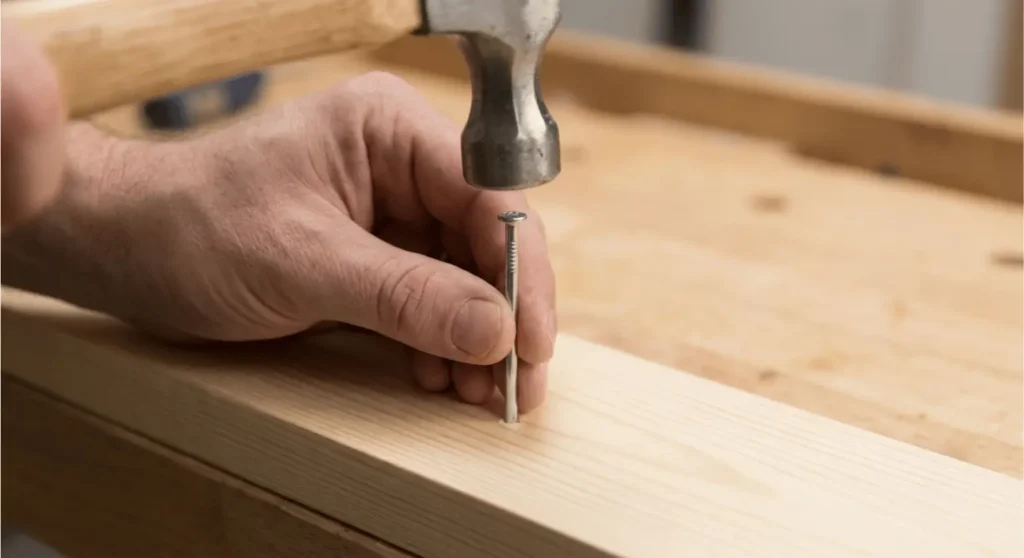
- Hold the nail with fingers, or consider using a magnetic nail starter for convenience.
- Make a single or double tap on the nail head to set it
- Separate fingers to ensure better control when using the claw nail.
- Swing with control
- Strike the ball in the center
- End with short clean strikes
Move wrist and arm together in a fluid movement. Don’t push the swing. The shot is more important than the strength when using a rip claw hammer effectively.
To Remove A Nail
- Place claw under the head of the nail
- Rock the hammer against the nail so that the claw can catch the nail
- If more lift is required, place a wood block under the head
- Pull in a steady motion
- Avoid placing your hand in the line of the nails
When the nail bends or goes too far, use a pry bar or nail puller. Twist not too tightly. This can harm the wood.
Safety Tips For Claw Hammer Use
A claw hammer may seem like a no-brainer, but safety is still important.
- Wear eye protection
- Do not put fingers in strike zone
- Choose the correct size hammer for the job
- Inspect the handle for cracks, particularly if it’s a fiberglass handle.
- Make sure the head is tight
- Stand on a stable surface
- Use a clean, dry grip
- Don’t hit hard metal or stone
- Avoid using a hammer that has been damaged
A lot of injuries begin with a slip, a bad swing or a loose handle. That can be prevented with a few seconds.
Common Mistakes
Using The Wrong Weight
An over-heavy hammer is a source of fatigue. A light hammer is difficult to use when driving nails. Use the right hammer for the task.
Hitting At The Wrong Angle
If the hammer does not strike square, a nail will bend. Maintain a flat face, and strike with control.
Pulling Nails The Hard Way
Some users pull too hard using the claw in the wrong place, risking damage to the hammer head. This may tear the wood or cause the nail to slip. Place the claw first and then pull with a steady pull.
Ignoring Handle Wear
Handle can crack or become loose in use. Replace the hammer or repair it before continuing to work.
Using One Hammer For Every Job
A claw hammer is a versatile tool but not all tools are the same. In some situations, a framing hammer or pry bar might be more effective.
Claw Hammer Vs Framing Hammer
| Tool | Best For |
|---|---|
| Claw hammer | Home repair, general use |
| Framing hammer | Heavy carpentry work and framing |
Most home users will need a claw hammer. It provides control and comfort.
A framing hammer is better for more demanding tasks. It weighs more and is more powerful. Also aids in long nails and rough building work.
When deciding on one tool for the home kit, a claw hammer is often the best choice. A framing hammer is better for working on building projects.
Claw Hammer Vs Other Tools
Claw Hammer Vs Pry Bar
A claw hammer is used to pry lightly and to pull out small nails. The pry bar provides more leverage for larger jobs.
Claw Hammer Vs Rubber Mallet
A claw hammer is used to hammer nails. Rubber mallet is used to tap parts without damage. Gently work with a mallet.
Claw Hammer Vs Finish Hammer
A finish hammer is used to provide a finer control for trimming and details. A claw hammer provides extra power for general applications.
Best Uses By User Type
For DIY Users
Most jobs around the house can be done with a curved claw hammer that weighs 16 oz. Suitable for repairs, hanging projects and light carpentry.
For Carpenters
If you need a more serious job, a straight claw or framing hammer might be more appropriate. It is useful for framing, nail removal and rough builds.
For Tool Buyers
Examine grip comfort, head quality, balance, and handle type, including the hammer handle material. The handle of a good hammer should fall into your hand.
For Beginners
Use a light to medium weight curved claw hammer, such as a Stanley model. It provides increased control and decreased strain, particularly with a shock reduction grip.
Buying Guide
When purchasing a claw hammer, keep these things in mind:
- Weight
- Handle material
- Grip comfort
- Head strength
- Balance
- Claw shape
- Face type
- Brand trust
- Warranty
Simple Buying Rule
- Home use: 16 oz curved claw
- Heavy work: 20oz straight claw
- Trim work: a lighter finish hammer to remove excess metal in the area around the edge
- Long use: fiberglass/composite handle
Price Range
The prices of claw hammers differ between brands and construction.
The budget models are suitable for light domestic use.
Most buyers will find mid-range models are ideal.
For trade use and long life, premium models like Estwing are suitable.
In many markets people are looking for claw hammer price in Pakistan, claw hammer price in the USA or UK claw hammer brands. Local price varies based on the brand, store and material.
How To Care For A Claw Hammer
While a claw hammer requires minimal maintenance, it is beneficial to take care of it to keep it in service for longer.
- Wipe the head after use
- Keep it dry
- Place in a tool box or tool rack to keep your hardware organized.
- Regularly inspect the grip for wear and tear, particularly the shock reduction grip.
- Replace broken handle
- Avoid growing it in wet soil or water
- Maintain clean face
A good care allows the hammer to be kept safe and ready for the next job.
Common Questions People Ask
What is the function of claw hammer?
Use a claw hammer to drive nails into wood or to pull nails out. It is also used for light repair and carpentry jobs.
So, why is it called a claw hammer?
It is named for the claw-like mark on the back of the head. The claw is used to pull nails out.
Which is the best size claw hammer for hardware projects?
Most home users will find a 16 oz claw hammer to be appropriate. A 20 oz. hammer is for heavy-duty tasks.
Are fiberglass hammers better?
Handles made from fiberglass absorb shock and are long-lasting. They are popular for their comfort and durability, especially models with a fiberglass handle.
Is a claw hammer able to pull out screws?
No. A claw hammer is used for nails. Use a screwdriver or screw extractor for screws.
Which is the best type of hammer for carpenters?
A framing hammer or straight claw hammer is used for heavy duty work by many carpenters. Others continue to use a curved claw hammer for general use.
Is 16 oz. enough?
Yes, if you have many jobs in your home. It is ideal for do-it-yourself, furniture repair, and small carpentry tasks.
Which hammer is the best one for woodworking?
An ordinary finish hammer or a light claw hammer may be appropriate for woodworking. The wood and the job will dictate which is the best.
Conclusion
The claw hammer is a basic hand tool used by everyone from homeowners to professionals. It is used to drive, pull nails, and for numerous repair and carpentry applications. It remains useful due to its simplicity, strength and control.
Most people find that a 16 oz curved claw hammer is the best place to start. It is suitable for day to day repairs, simple do-it-yourself tasks and light woodworking. If you are looking to use a hammer on more substantial tasks, you might want to use a straight claw or framing hammer.
Select the appropriate hammer for the job. Inspect the grip, weight, balance, and handle of the hammer, especially if it has a wood handle. Use it with care. A well-made claw hammer will last for years and years.