
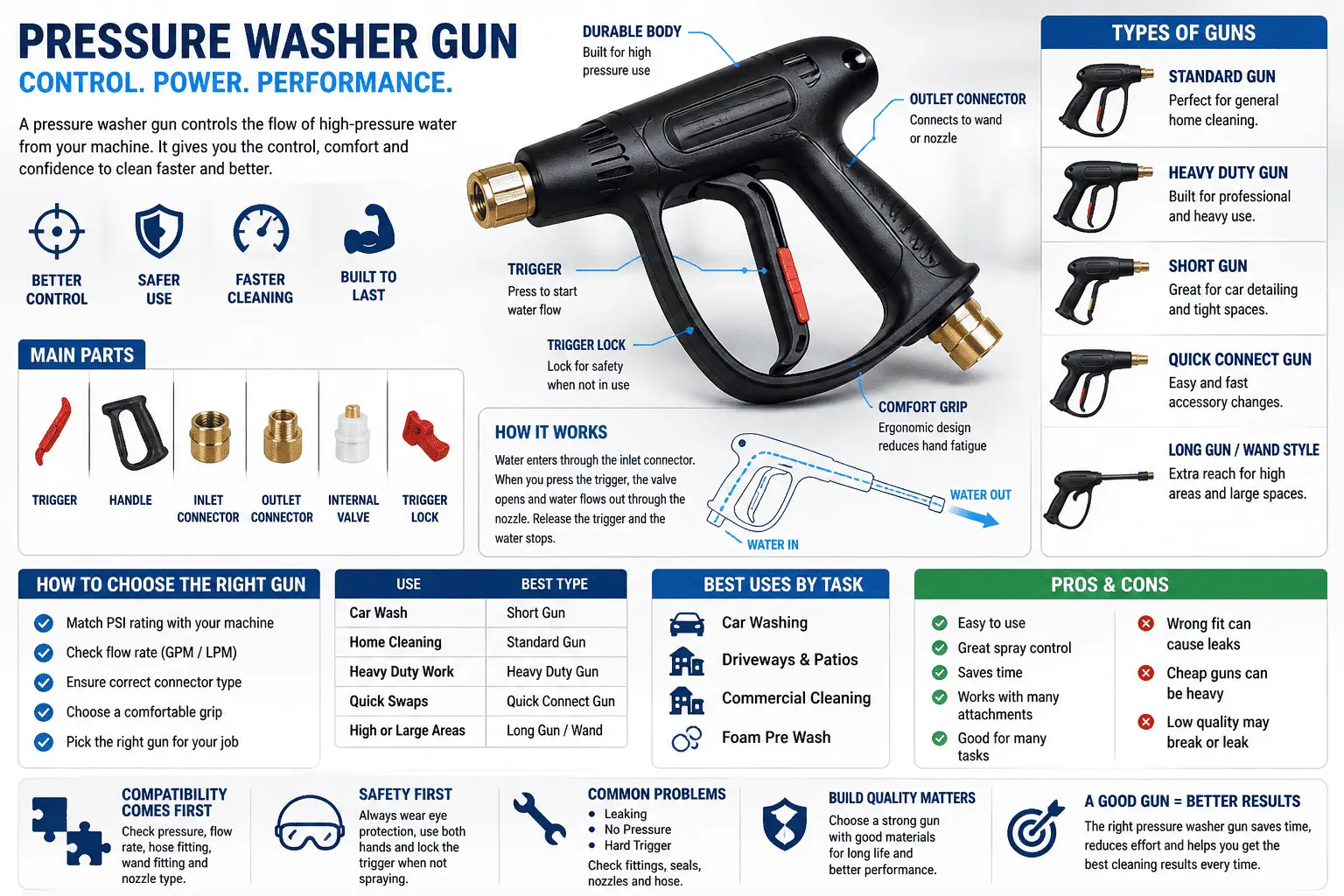
What Is a Pressure Washer Gun?
The hand tool that regulates the flow of high-pressure water of a pressure washer is a pressure washer gun. It allows you to turn on and off the spray using a trigger. It also makes you more in control of directing the water.
It can also be referred to as a pressure washer trigger gun, spray gun, power washer gun or high pressure washer gun. All these names are aimed at the same principle. It is that which you hold as you clean up.
A good gun is easy to clean. It provides you with enhanced control, enhanced comfort and enhanced outcomes.
Why It Matters
The gun is not a tiny additional component. It influences the entire employment.
With a powerful and perfectly fitted pressure washer gun, you:
- You can easily control spray with the MTM nozzle attachment.
- Clean faster
- Reduce hand strain
- Avoid leaks
- Protect your pressure washer
- Using a surface cleaner helps clean cars, walls, floors, and tools better.
An incorrect or defective gun may lead to trouble. It may leak if the brass fittings are not properly secured. It may feel heavy. It may not fit your hose. It might not be able to withstand the pressure of your machine.
How a Pressure Washer Gun Works
The gun is placed in between the hose and the nozzle or wand. The water is pushed into the gun. The gun opens the water path when you press the trigger. The water flows through the gun and out through the nozzle.
When you release the trigger the flow ceases.
This bare bones design provides you with the control over:
- Start and stop
- Spray direction
- Spray force
- Cleaning distance
Main Parts
A pressure washer gun typically includes the following parts:
- Trigger
- Handle
- Inlet connector
- Outlet connector
- Internal valve
- Trigger lock
Other guns have quick connect fittings, foam cannons, or extension wands.
Types of Pressure Washer Guns
No one gun fits all occupations. The most appropriate decision will be based on the way you clean and what kind of machine you clean with.
Standard Gun
This is the most common type. It is effective in cleaning the house and most of the general tasks.
Best for:
- Driveways
- Patios
- Garden tools
- Outdoor furniture
- Light vehicle cleaning
Heavy Duty Gun
This kind is appropriate with potent pressure washers and protracted cleaning periods. It tends to be stronger where it is needed and also in the area of supporting grip.
Best for:
- Commercial cleaning
- Shop use
- Fleet washing
- Tough surface cleaning
Short Gun
Close control is provided by a short gun with a ceramic nozzle. It can be used in tight areas and in detailing.
Best for:
- Car washing
- Wheel cleaning
- Foam cannon use
- Small spaces
Quick Connect Gun
This gun is quicker in making changes. It is good when you change nozzles or tools frequently.
Best for:
- Fast work
- Detailers
- Users who change accessories a lot
Long Gun or Wand Style
Other users would like to be even more reachable. The extended setup is useful when you wish to be out of the surface.
Best for:
- Walls
- Floors
- High spots
- Larger outdoor areas
How to Choose the Right One
The most suitable pressure washer gun is that which fits your machine and your job. Never judge a book by its cover.
1- Check Pressure Rating
Your gun should be able to withstand the pressure of your washer. See the PSI rating. Bar is also shown using some tools.
When the gun rating is not high enough, it may break. It can burst or spurt.
2- Check Flow Rate
Flow matters too. This is usually expressed in GPM or LPM. A gun ought to suit the speed of your washing machine. Otherwise, the performance may decline.
3- Check Connector Type
It is among the largest purchasing errors. You must have the proper fit.
Types of common connectors are:
- M22 connector
- Quick connect coupler
- 1/4 inch fitting
- 3/8 inch fitting
Unless the fitting fits well, the gun will not perform well.
4- Check Grip and Weight
When you take a long time cleaning, it is a matter of comfort. A well-gripped gun will lessen the pain and fatigue of the hands.
Look for:
- The easy trigger pull allows for comfortable pressure washing.
- Firm handle
- Balanced weight
- Trigger lock
5- Check the Job Type
The correct decision is based on your usage.
| Use | Best Type |
|---|---|
| Car wash | Short gun |
| Home cleaning | Normal gun |
| Heavy work | Heavy duty gun |
| Quick swaps | Quick connect gun |
6- Compatibility Comes First
Brand names are not as important as compatibility. A trendy gun cannot be of any help when it fails to fit your system.
What to Check First
Before buying, check:
- Machine pressure
- Water flow
- Hose fitting
- Wand fitting
- The nozzle type can be a swivel for better maneuverability.
- Foam cannon support
Common Compatibility Problems
These issues have been observed as a problem to many users:
- M22 and quick connect confusion
- Loose hose fit
- Wrong thread size
- Poor nozzle match
- Leaks at the joint
When your gun does not fit, then your cleaning task becomes more difficult. You can also squander water and time.
Best Uses by Task
A pressure washer gun is used in numerous locations. Every activity requires a slightly different configuration.
1- For Car Washing
A short gun can be very effective. It provides tight control. It is also handy in case you use a foam cannon.
Good for:
- Body panels
- Bumpers
- Wheels
- Wheel wells
2- For Driveways and Patios
A long or standard gun is good here. You require access and control over a broader area.
Good for:
- Concrete
- Pavers
- Tile
- Stone
3- For Commercial Cleaning
A more suitable option would be a heavy duty gun. It must be able to accommodate long usage and repeated spray cycles.
Good for:
- Shop floors
- Walls
- Tools
- The work areas can be effectively cleaned with a surface cleaner.
4- For Foam Pre Wash
Load a gun that is compatible with a foam cannon. This aids in the coverage of the surface with the soap prior to the rinse.
Good for:
- Cars
- Bikes
- Trucks
- SUVs
Pros and Cons
Pros
- Easy to use
- The stainless steel construction provides excellent spray control.
- Saves time
- Assists in numerous cleaning tasks
Cons
- Wrong fit may result in leaks
- Bad guns are heavy
Pricing and Value
The prices vary depending on the construction, fittings, and strength. A basic home model is cheaper. A heavy duty model is more expensive.
Price Ranges
| Type | Price Level |
|---|---|
| Basic gun | Low |
| Mid-range gun | Medium |
| Heavy duty gun | High |
Do not purchase based on price. A low priced gun may end up being expensive in the future when it leaks or breaks down.
Look for value in:
- Fit
- Comfort
- Safety
- Durability
- Spare part support
How to Fix Common Problems
Pressure Washer Gun Leaking
A leak may be as a result of:
- Worn seals
- Loose fittings
- Bad thread match
- Cracked parts
What to do: Use a surface cleaner for optimal results.
- Tighten the fit
- Check the seal
- Replace worn rings
- Confirm connector size
Pressure Washer Gun Has No Pressure
This can happen when:
- The nozzle is clogged
- The fitting is incorrect
- The gun is damaged
- The hose is not tied down
What to do:
- Check the hose
- Clean the nozzle
- Check the trigger valve
- Try another fitting
Trigger Feels Hard to Pull
This could occur when:
- Dirt accumulates within
- The spring wears out
- The gun is of poor quality
What to do:
- Clean the gun
- Check the trigger lock
- Change the gun in case the issue remains
Safety Tips
The pressure washer guns employ powerful water pressure. Take care of them.
Basic Safety Rules
- Not to point the gun on people or pets
- Wear eye protection
- Have dry and stable feet
- When necessary, hold the gun with two hands for better stability while using the garden hose.
- When not spraying, lock the trigger
- Switch off washer prior to replacement
Why Safety Matters
Intense water pressure is capable of cutting skin and damaging surfaces. Even the spray can kick back in case the nozzle strikes a hard surface. The correct distance and a safe grip can decrease risk.
Best Buying Checklist
This is a very basic list to use before you shop:
- Pressure rating equal to your washer
- Flow rate is compatible to your machine
- Type of connector is proper
- Grip good in hand
- Trigger works smooth
- Build feels strong
- Spares and seals are on sale
- It suits your primary job
Who Should Use Each Type
Homeowners
A standard gun is a good fit. It is easy to manage typical cleaning tasks.
Car Detailers
Quick connect gun or short gun are effective. It provides more control in the areas around the crunches.
Commercial Users
The better option would be a heavy duty gun. It deals with the frequent use and rough work of pressure washing.
DIY Users
Select an easy-fitting gun with simple fittings. What is most important is comfort and compatibility.
Real World Scenarios
A consumer who cleans his or her car once a week might require a short gun with a foam cannon. An example is a user who cleans a driveway once a month and may require a powerful wand that is powered by a strong gun.
A store owner who washes tools and floors everyday might require a heavy duty gun with a firm trigger lock. It is all about the job, rather than the brand, which is the right choice.
What Competitors Often Miss
Most guides are at the level of simple product lists. They fail to elaborate on what buyers require the most.
Missing points are the most missed:
- Connector match
- PSI and GPM fit
- Safety steps
- Comfort and grip
- Real use cases
- Fixing leaks
Once you address these issues, the content will be more helpful and more credible.
Simple Decision Guide
Follow this guide to make a quick decision.
- Select a short gun when cleaning cars or narrow areas.
- Select a generic gun in case you desire a general purpose tool.
- Select a heavy duty gun when cleaning frequently or to work.
- Select a quick connect gun when you switch parts frequently.
- Select a gun with a foam cannon in case you are concerned about the coverage of the soap.
Pressure Washer Gun vs Wand
A pressure washer gun provides you with a trigger control. A stick makes you have a reach.
Gun
- Better hand control
- More suitable to close work
- More suitable to detail work
Wand
- Better reach
- More so on walls and floors
- More standing-distance
Both are used by many users. That provides the optimal combination of control and reach.
Pressure Washer Gun vs Foam Cannon Setup
The gun is not substituted with a foam cannon. It plays with the gun.
The gun is used to pump water to the foam cannon. The mixing of the cannon is a mixture of soap and water. The foam is attached to the surface and assists in the lifting of dirt.
This is a good arrangement in:
- Car washing
- Bike washing
- Pre-rinse cleaning
Conclusion
A pressure washer gun may look simple, but it has a big role in the cleaning job. It controls spray, improves comfort, and affects the final result.
The best choice depends on your pressure washer, your fittings, and your task. Focus on compatibility first. Then check pressure rating, flow rate, grip, and build quality. If you clean cars, a short gun may be best. If you clean large areas, a standard or long gun may work better. If you clean for work, a heavy duty gun The SGS28 model is a smart pick for efficient pressure washing.
A good choice saves time, reduces stress, and gives you a better clean. Want to read about cordless rotatory hammer.
FAQs
What Is a Pressure Washer Gun?
The handheld trigger device that regulates the flow of water in a pressure washer is known as the pressure washer gun.
Can I Use Any Pressure Washer Gun?
No. 28 is a model of the SGS28 pressure washer. You need to be able to match the pressure, flow, connector type.
What PSI Gun Do I Need?
The gun should be able to withstand the pressure of your washer. Always ensure that you check the machine rating first.
Are Pressure Washer Guns Universal?
No. Some are near, and many require the correct fitting and connector type.
Why Is My Pressure Washer Gun Leaking?
Leak can be caused by old seals, loose fittings, or incorrect connector size.
What Is the Best Gun for Car Detailing?
A small pressure washer gun is usually the best to use when car detailing because it is easier to control.
Is a Heavy Duty Gun Better?
Yes. A trigger lock helps prevent accidental spray and adds safety during use.